
ISO 9001:2026 is entering the final stage of its revision, and organizations that currently operate an ISO 9001:2015 Quality Management System should start preparing for the changes.
As of August 2026, the revised standard is at the final stage of development. ISO’s official information indicates that the new edition is under publication for September 2026, while the Final Draft International Standard (FDIS) represents the finalized draft submitted through the approval process.
This means organizations do not need to rebuild their Quality Management System from scratch. However, they should understand the direction of the revision, review their existing processes and prepare for areas where the updated requirements may require stronger evidence or implementation.
In this guide, we explain the key ISO 9001:2026 changes, what they mean for organizations, how they differ from the familiar ISO 9001:2015 approach, and what businesses can do now to prepare.
Important: This article is based on ISO’s published revision information and final-stage draft material available as of August 2026. Minor wording or implementation details may change in the final published edition.
What Is ISO 9001:2026?
ISO 9001:2026 is the upcoming revision of ISO 9001, the internationally recognized standard for Quality Management Systems (QMS).
ISO 9001 provides a framework that helps organizations consistently deliver products and services that meet customer and applicable requirements while improving processes and customer satisfaction.
The 2026 revision is intended to keep the standard relevant to changing business conditions while retaining the established management-system framework.
According to ISO’s official standard page, ISO 9001:2026 is the sixth edition and is currently under publication, with publication scheduled for September 2026.
The revision follows the 2015 edition and the 2024 climate-action amendment, and organizations certified to ISO 9001:2015 will have a transition period once the new edition is formally published.
Why Is ISO 9001 Being Revised?
ISO management-system standards are periodically reviewed to ensure that they remain relevant to organizations and their stakeholders.
The ISO 9001 revision has been developed to improve clarity, usability and relevance while reflecting modern business expectations.
The revision process has also considered developments such as changing customer expectations, organizational complexity, climate-related considerations, quality culture and the need for stronger integration between quality management and business performance.
ISO’s revision information highlights clearer requirements, stronger leadership and quality culture, greater clarity around risks and opportunities, a new Annex A and closer alignment with other ISO management-system standards. :contentReference[oaicite:3]{index=3}
Is ISO 9001:2026 Already Published?
Not yet, as of August 2026.
This distinction is important for organizations researching the new requirements.
ISO’s official standard page currently lists the new edition as under publication, with the publication date shown as September 2026. The Final Draft International Standard has already reached the final approval stage, meaning organizations can prepare based on the final-stage requirements while recognizing that the formally published text is the authoritative version once released.
The ISO technical committee reported in May 2026 that ISO/FDIS 9001 had been released for ballot as the revision progressed to its final stage. :contentReference[oaicite:4]{index=4}
For this reason, organizations should avoid treating unofficial summaries or early draft comparisons as substitutes for the final published standard.
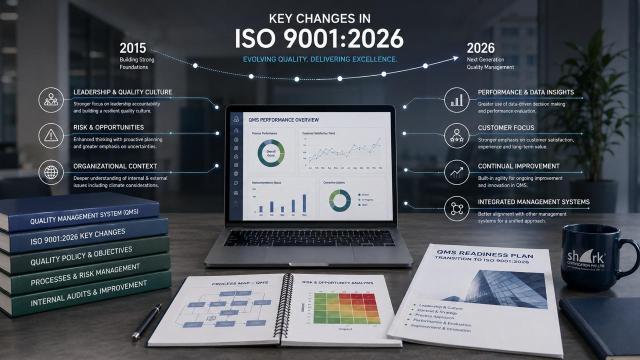
7 Key ISO 9001:2026 Changes Organizations Should Understand
1. Stronger Focus on Quality Culture
One of the most important developments in the 2026 revision is the stronger emphasis on quality culture.
Quality should not exist only in procedures, forms and audit records. The updated direction places greater emphasis on how leadership promotes quality and how quality-related behaviours become part of everyday organizational activities.
This means organizations may need to think more carefully about how quality values are communicated, demonstrated and reinforced throughout the organization.
For management teams, the practical implication is that quality culture should be visible in decision-making, employee awareness, improvement activities and leadership behaviour.
What organizations should do:
- Review how leadership communicates quality objectives.
- Evaluate employee awareness of quality responsibilities.
- Connect quality objectives with everyday business decisions.
- Document meaningful evidence of leadership involvement.
- Encourage continual improvement beyond formal corrective actions.
2. Greater Emphasis on Leadership and Accountability
ISO 9001:2026 strengthens the connection between leadership and effective quality management.
Senior management should not treat the QMS as a separate compliance function managed only by the quality department.
Leadership involvement should be reflected in business planning, resource decisions, improvement priorities and the organization’s approach to customer satisfaction.
The revised direction also places greater emphasis on leadership supporting a quality culture and continual improvement.
For organizations already certified to ISO 9001:2015, this means reviewing whether management involvement is genuinely visible rather than demonstrated only through scheduled management-review meetings.
What organizations should do: Review management responsibilities, quality objectives, performance reviews and evidence showing how leadership influences quality performance.
3. Clearer Treatment of Risks and Opportunities
Risk-based thinking remains an important part of ISO 9001, but the 2026 revision provides greater clarity around how organizations should address risks and opportunities.
Organizations should understand how risks and opportunities affect their ability to achieve intended QMS outcomes and how those considerations influence planning and decision-making.
This is particularly important in organizations facing changing supply chains, technology, customer expectations, regulatory requirements or operational conditions.
What organizations should do:
- Review the current risk and opportunity methodology.
- Connect identified risks with actual business processes.
- Evaluate opportunities alongside risks.
- Review whether actions are effective.
- Ensure risk information reaches relevant decision-makers.
4. Climate Change and Organizational Context
Climate change has already entered ISO management-system requirements through the 2024 amendments to several management-system standards.
ISO 9001:2026 continues this direction by strengthening the consideration of external issues and organizational context.
Organizations should consider whether climate change is a relevant issue for their ability to achieve the intended outcomes of their Quality Management System.
The answer will not necessarily be the same for every organization.
For some businesses, climate-related conditions may affect supply chains, logistics, raw materials, production conditions or customer requirements. For others, the impact may be less significant.
What organizations should do: Review the context of the organization and determine whether climate change is a relevant issue affecting the QMS and its intended outcomes.
5. A New Annex A for Additional Guidance
Another notable feature of ISO 9001:2026 is the introduction of a new Annex A.
ISO describes the new annex as supporting clearer understanding of the standard’s structure, terminology and requirements.
This can be useful for organizations implementing the standard because it provides additional context without changing the fundamental management-system structure.
Organizations should nevertheless distinguish between normative requirements and supporting guidance when interpreting the revised standard.
What organizations should do: Use Annex A to improve understanding and implementation, while basing conformity decisions on the actual requirements of the standard.
6. Greater Focus on Continual Improvement and Quality Performance
Continual improvement remains central to ISO 9001, but the revised standard places greater emphasis on demonstrating how quality management contributes to organizational performance.
Organizations should not view improvement as simply closing corrective-action reports.
Effective improvement can involve identifying trends, evaluating performance data, addressing recurring problems, improving processes and using information to make better decisions.
Organizations should therefore review whether their QMS produces useful information for management rather than generating documentation only for audit purposes.
What organizations should do:
- Track meaningful quality trends.
- Review recurring nonconformities.
- Measure process effectiveness.
- Use customer feedback as an improvement input.
- Evaluate whether improvement actions actually deliver results.
7. Closer Alignment With Other ISO Management-System Standards
ISO 9001:2026 is designed to remain aligned with the broader structure used by ISO management-system standards.
This is important for organizations operating integrated management systems such as ISO 9001, ISO 14001 and ISO 45001.
Closer structural alignment can make it easier for organizations to integrate common processes such as leadership, planning, risk management, internal auditing and management review.
Organizations with multiple ISO certifications should therefore consider the 2026 revision as an opportunity to review how their management systems work together.
Shark Certification also supports organizations across multiple management-system standards through its certification services.
ISO 9001:2015 vs ISO 9001:2026
| Area | ISO 9001:2015 | ISO 9001:2026 Direction |
|---|---|---|
| QMS framework | Established quality management framework | Core framework retained with targeted updates |
| Leadership | Leadership and commitment required | Stronger emphasis on leadership, quality culture and accountability |
| Quality culture | Not expressed with the same emphasis | Greater focus on embedding quality culture |
| Risks and opportunities | Risk-based thinking and planning | Greater clarity around risks and opportunities |
| Climate change | Addressed through 2024 amendment | Continued integration into organizational context |
| Guidance | Existing supporting guidance | New Annex A for additional clarification |
| Continual improvement | Required | Stronger emphasis on effective improvement and performance |
| Integration | Compatible with other ISO standards | Closer alignment with ISO management-system standards |
Note: This comparison summarizes the final-stage revision direction. Organizations should confirm requirements against the formally published ISO 9001:2026 text once released.
What Does ISO 9001:2026 Mean for ISO 9001:2015 Certified Organizations?
Organizations currently certified to ISO 9001:2015 should not assume that they need to completely redesign their Quality Management System.
The revision is evolutionary rather than a complete replacement of the ISO 9001 management-system approach.
However, organizations should assess whether their existing processes adequately address the updated emphasis on leadership, quality culture, organizational context, risks and opportunities, improvement and supporting guidance.
ISO states that certified organizations will have a transition period to adapt after the new edition is published. :contentReference[oaicite:5]{index=5}
The exact transition arrangements should be confirmed with the organization’s certification body once the final standard and applicable transition requirements are formally in effect.
ISO 9001:2026 Transition Checklist
Organizations can begin preparing with a structured readiness review.
| Area | What to Review |
|---|---|
| Leadership | Is top management visibly involved in quality performance and improvement? |
| Quality culture | Do employees understand and demonstrate the organization’s quality values? |
| Organizational context | Have relevant internal and external issues been reviewed? |
| Climate change | Has the organization determined whether climate change is relevant to the QMS? |
| Risks | Are quality-related risks identified, evaluated and addressed? |
| Opportunities | Are opportunities for improvement and better performance actively considered? |
| Change management | Are changes planned, communicated and reviewed for effectiveness? |
| Knowledge | Is important organizational knowledge identified, maintained and available? |
| Customer focus | Is customer feedback systematically used to improve quality? |
| Performance data | Does management receive useful quality-performance information? |
| Internal audit | Can the audit programme identify weaknesses in the updated QMS requirements? |
| Management review | Does management review support decisions and continual improvement? |
| Training | Have relevant employees been prepared for the revised requirements? |
What Should Organizations Do Before ISO 9001:2026 Is Published?

Organizations do not need to wait for publication before beginning preparation.
A sensible approach is to focus on readiness rather than immediately rewriting every document.
1. Understand the Revision
Quality managers and senior management should first understand the areas that are changing and determine which parts of the existing QMS could be affected.
2. Conduct a Gap Analysis
Compare the existing QMS against the final-stage requirements and identify areas where additional evidence, processes or awareness may be required.
Shark Certification already provides ISO 9001 certification support, including gap analysis, documentation support, internal audits and certification-audit preparation.
3. Review Leadership Evidence
Check whether management involvement is visible in quality objectives, business decisions, improvement activities and performance reviews.
4. Review Quality Culture
Evaluate whether employees understand their role in maintaining and improving quality.
5. Review Risks and Opportunities
Check whether risk and opportunity information is connected to real business decisions rather than maintained only as a formal register.
6. Review Existing Documentation
Do not automatically create new procedures for every revision. First determine whether existing processes already meet the intent of the updated requirements.
7. Train Relevant Personnel
Quality managers, internal auditors, process owners and senior management should understand the changes before the transition assessment.
Shark’s ISO training services include Quality Management System training covering ISO 9001 and related standards.
8. Plan the Transition With Your Certification Body
Once the final standard and formal transition arrangements are available, organizations should confirm their transition plan, audit timing and applicable requirements with their certification body.
Will ISO 9001:2026 Require a Completely New QMS?
No.
The revision maintains the established ISO 9001 management-system framework rather than replacing it with a completely different approach.
For organizations already operating an effective ISO 9001:2015 QMS, the transition should focus on understanding the revised requirements, identifying gaps and strengthening existing processes where necessary.
The biggest opportunity is therefore not rewriting documents simply to satisfy an auditor. It is making sure the QMS actually supports quality performance, customer satisfaction, informed decision-making and continual improvement.
Common Mistakes to Avoid During the ISO 9001:2026 Transition
Waiting Until the Last Minute
Organizations that wait until the end of the transition period may have limited time to train employees, conduct internal audits and address gaps.
Rewriting Everything
The revision does not mean that every existing procedure needs to be replaced. Organizations should first identify actual gaps.
Focusing Only on Documentation
A strong QMS is demonstrated through processes, decisions, performance and employee behaviour—not simply through documents.
Ignoring Leadership
The stronger emphasis on leadership and quality culture means senior management should be actively involved in the transition.
Using Unofficial Summaries as the Final Requirement
Before making formal compliance decisions, organizations should verify requirements against the published ISO 9001:2026 standard and applicable transition instructions.
How Shark Certification Can Help With ISO 9001:2026 Preparation
Shark Certification currently provides ISO 9001:2015 certification services and supports organizations through consultation, gap analysis, documentation, internal audits and certification-audit preparation.
Shark’s ISO 9001 certification service explains its support process, including initial consultation, gap analysis, documentation support, internal audits, certification audits and ongoing support.
Organizations preparing for the 2026 revision can use this type of structured approach to assess their existing Quality Management System and identify areas requiring attention.
Shark also provides audit services and consultancy services that can support organizations with readiness reviews, compliance assessments and management-system improvement.
For organizations looking to prepare their internal teams, Shark’s training services include ISO 9001 Quality Management System training.
Planning for ISO 9001:2026? Contact Shark Certification to discuss your organization’s transition-readiness requirements.
Frequently Asked Questions About ISO 9001:2026
What is ISO 9001:2026?
ISO 9001:2026 is the upcoming revised edition of ISO 9001, the international standard for Quality Management Systems. As of August 2026, the revision is at the final stage and the new edition is listed by ISO as under publication for September 2026.
What are the main changes in ISO 9001:2026?
The major areas of change include clearer requirements, stronger emphasis on leadership and quality culture, greater clarity around risks and opportunities, continued consideration of climate change, a new Annex A for additional guidance and closer alignment with other ISO management-system standards.
Is ISO 9001:2026 already published?
As of August 2026, ISO lists the new edition as under publication, with publication indicated for September 2026. The Final Draft International Standard has reached the final stage of the approval process.
What happens to ISO 9001:2015 certification?
Organizations certified to ISO 9001:2015 will have a transition period after the new edition is published. The exact transition arrangements and deadlines should be confirmed with the organization’s certification body.
Do companies need to completely replace their ISO 9001:2015 QMS?
No. The revision retains the established ISO 9001 management-system framework. Organizations should assess their current QMS, identify gaps against the updated requirements and strengthen existing processes where necessary.
Does ISO 9001:2026 introduce a quality culture requirement?
The final-stage revision places stronger emphasis on quality culture, leadership and accountability. Organizations should therefore evaluate how quality values are communicated, demonstrated and embedded throughout the organization.
Does ISO 9001:2026 include climate change?
Climate change is already relevant to ISO management-system standards through the 2024 climate-action amendments. The 2026 revision continues this direction by strengthening consideration of organizational context and relevant external issues.
What is the new Annex A in ISO 9001:2026?
The new Annex A provides additional guidance intended to clarify the structure, terminology and intent of the standard. Organizations should use it as supporting guidance while determining conformity based on the actual requirements of the standard.
When should organizations start preparing for ISO 9001:2026?
Organizations can begin preparation before formal publication by understanding the final-stage changes, conducting a gap analysis, reviewing leadership and quality culture, training relevant personnel and planning the transition with their certification body.
Will ISO 9001:2026 change internal audits and management reviews?
The fundamental role of internal audits and management reviews remains part of the Quality Management System. However, organizations should review whether these processes provide effective evidence of leadership involvement, performance evaluation, risks, opportunities and continual improvement.
Can a new organization implement ISO 9001:2026 directly?
Organizations planning a new QMS around the time of publication should discuss the appropriate implementation and certification approach with their certification body or consultant. The applicable published edition and transition arrangements should be confirmed before starting formal certification activities.
Practical Takeaway
ISO 9001:2026 is an evolution of the Quality Management System, not a complete reset.
The most important preparation areas are leadership, quality culture, organizational context, climate-related considerations, risks and opportunities, continual improvement, performance data and the effective use of the QMS in everyday business decisions.
Organizations certified to ISO 9001:2015 should use the period before and immediately after publication to understand the revised requirements, conduct a structured gap analysis and prepare their people and processes.
The best transition strategy is not to rewrite every document. It is to identify what has actually changed, determine where the existing QMS already meets the intent and strengthen the areas where evidence or implementation needs improvement.
For professional support with ISO 9001 implementation, transition readiness, training or auditing, contact Shark Certification.
